
Digital Passport
Limitations in selling on European markets
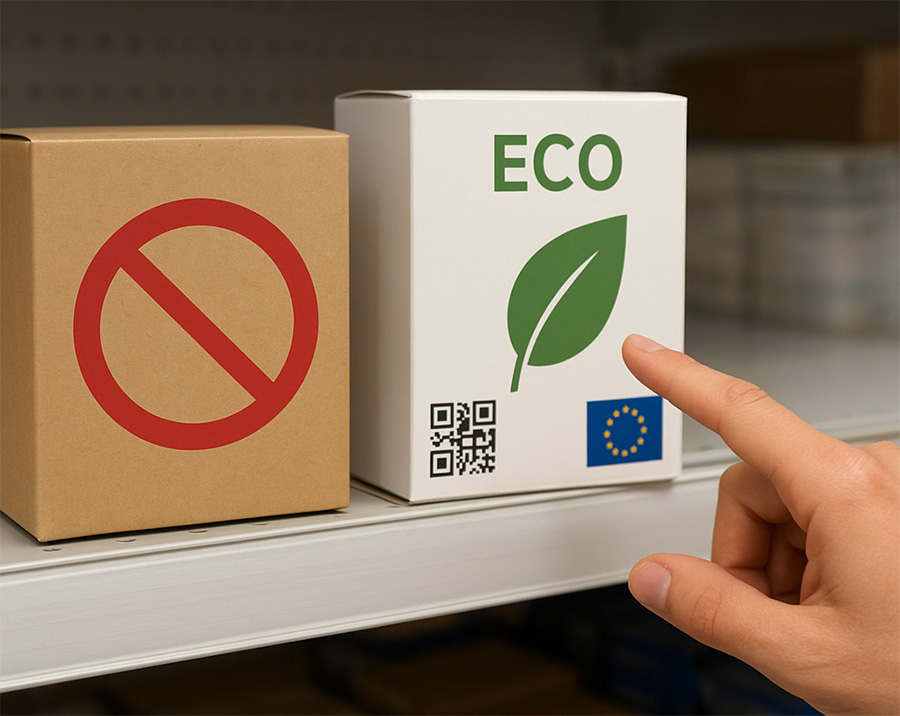
Since the DPP is one of the key measures of the European Ecodesign for Sustainable Products Regulation (ESPR), once the obligation becomes operational for a given sector, its absence may prevent access to the European market for certain products.
Non-compliant manufacturers may be denied the possibility to sell in EU countries, with direct economic consequences.
Regulatory non-compliance
When the obligation comes into force for the relevant sector, the absence of the DPP may result in penalties or market withdrawals, as products would not comply with the new EU rules on transparency, traceability, and sustainability.
Non-aligned companies also risk reputational damage linked to lack of transparency.
Difficulties in managing the value chain
Without a DPP, it becomes more complex to track materials, components, and environmental impacts throughout the product lifecycle.
This limits the company’s ability to demonstrate environmental responsibility, also hindering processes like repair, recycling, and reuse.
Loss of competitiveness
In a market increasingly oriented towards sustainability and circularity, the absence of the DPP can represent a competitive handicap.
Customers, both B2B and B2C, tend to prefer transparent brands that comply with EU regulations, reducing opportunities for non-compliant manufacturers.
Contact us for more information
+39 030 7777184